I grew up shooting a 1911. My grandfather had an old Remington Rand 1911 that still bore its U.S. Army property markings. It had elegant lines, stag grips, precision sights, and a leather holster with “U.S.” stamped on the retention flap.
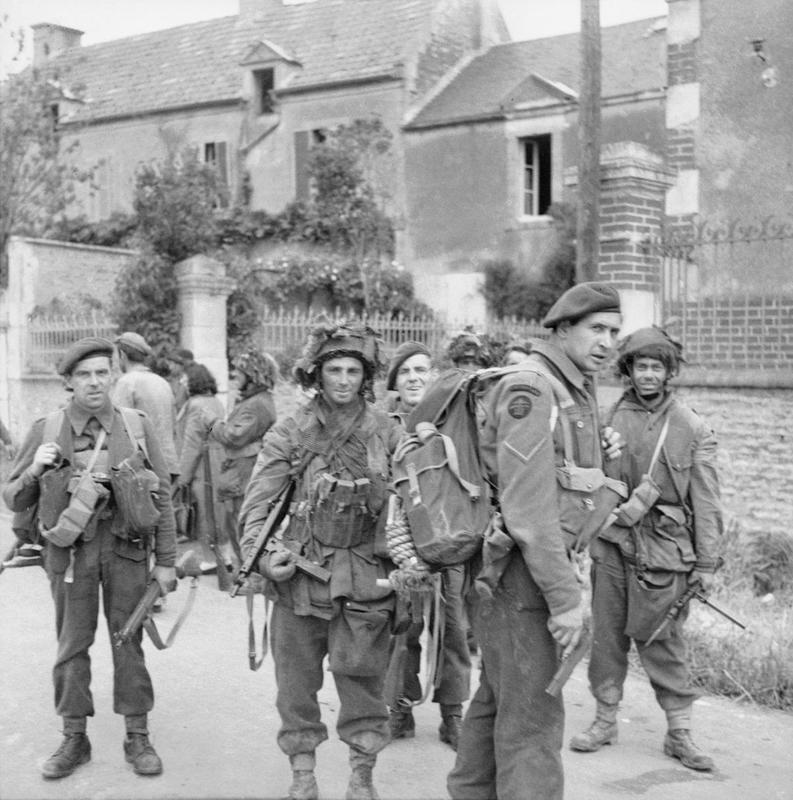
My grandfather unknowingly abused that gun for fifty years. When he taught me how to clean it, he locked the slide back, scrubbed the barrel with a cleaning rod and pieces of torn-up old T-shirts, sprayed the whole thing down with WD-40, slapped it on the ass, and called it good. The gun ran like a top, and I still don’t think I ever saw it malfunction. That pistol prejudiced me against every service gun I would be issued for the rest of my career.
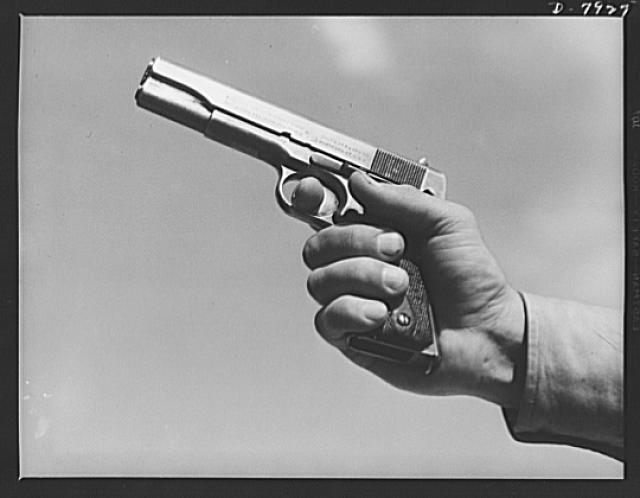
In truth, my grandpa’s abuse was harmless. That gun endured decades of heavy use and was no worse for the wear. The real abuse came later, when teenage me entrusted it to a neighborhood amateur gunsmith.
My friend’s dad was a tinkerer with guns and wanted to see it. He offered to perform some maintenance, and when I told my grandpa, he readily agreed. When I got the gun back, he had removed the stag grips and replaced them with cheap plastic ones. He claimed the stag would leach moisture onto the metal and eventually warp the frame.
He also kept the old Army holster and replaced it with a cheap Uncle Mike’s–style nylon holster. The front sight eventually worked loose after repeatedly catching on the subpar holster, so my grandpa, ever the pragmatist, had the slide milled for new sights.
I don’t know what ever became of Mr. Winkley, but wherever he is, I hope my grandpa’s stag grips are keeping one of his guns nice and dry.
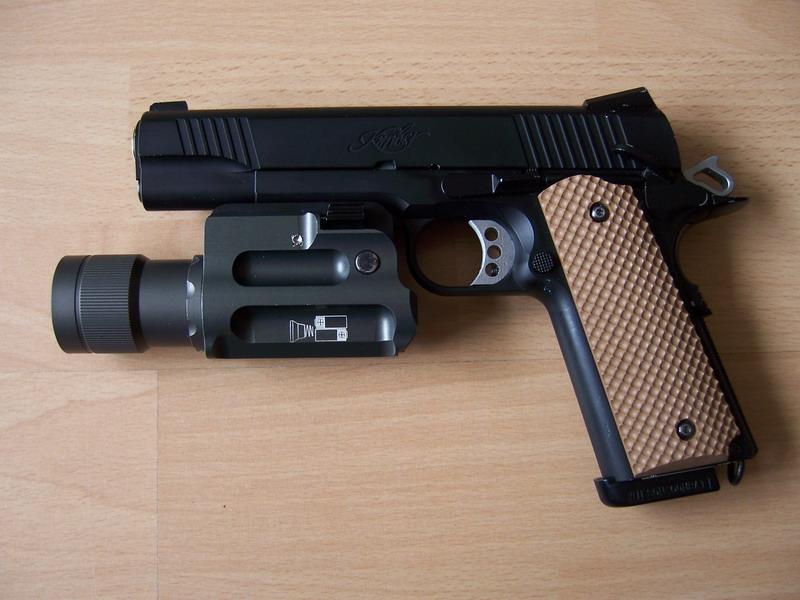
My next 1911 was a Kimber Desert Warrior, a gift from my lovely wife. I did not know it at the time, but the Desert Warrior had a little Marine Corps history in its blood. In 2003, Marine Corps Special Operations Command Detachment One ordered 100 .45-caliber pistols from Kimber. They were called Interim Close Quarters Battle pistols and came with light rails and an expected service life of 30,000 rounds. Mine was not one of those guns, I am not that lucky, but the Desert Warrior was their civilian descendant, built for the rest of us. My wife, without knowing it, had bought me the civilian cousin of a Marine special operations pistol.
The gun shoots like a dream, has always been extremely reliable, and has a beautiful finish. Unfortunately, these days it mostly adorns the inside of my safe. Whatever controversies Kimber may have had back then, my pistol has always been solid and reliable. I also have a subcompact Kimber that is hell on my wrists but still operates reliably.
Finally, there is the crown jewel of my collection: my Nighthawk Enforcer.
When I was coming home from Iraq, my whole unit had gotten together and ordered Para-Ordnance double-stack 1911s engraved with the Fairbairn–Sykes dagger and “De Oppresso Liber” on the slide. Having sufficient exposure to low-cost 1911s by that point, I wanted something more memorable.
I ordered a Nighthawk Enforcer.
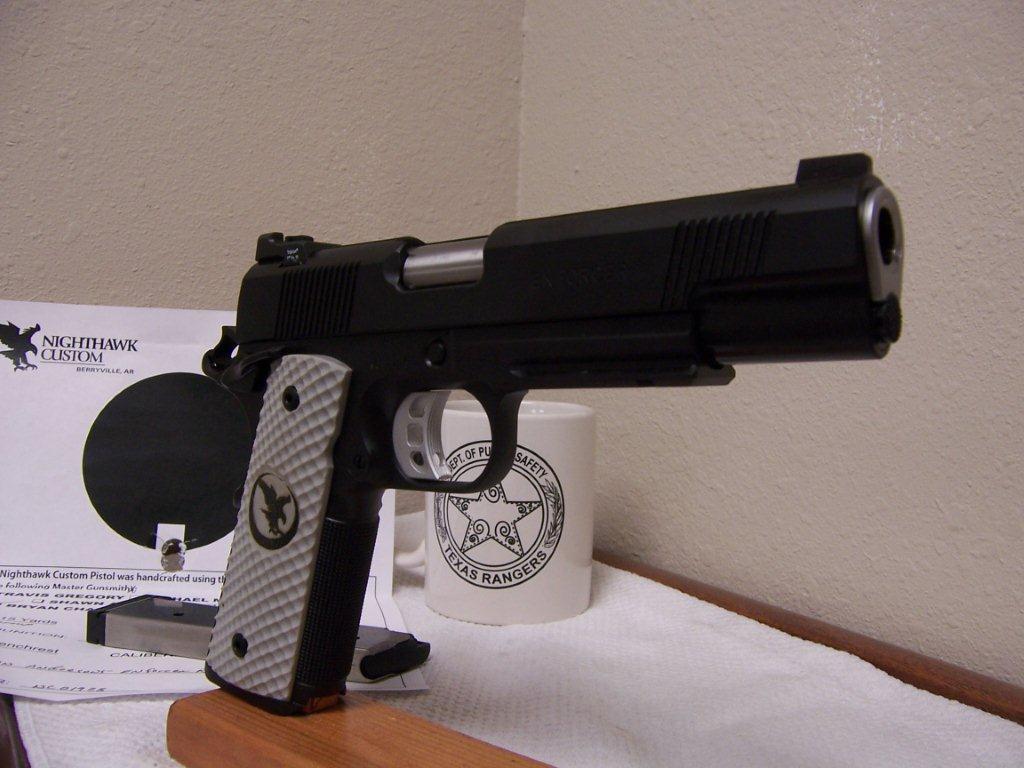
I asked for the frontstrap checkering to be cut at 20 lines per inch, basically spikes digging into your fingers, and Heinie Ledge sights in the Straight Eight configuration.
The tolerances on this gun are so tight that they are difficult to believe. The old Remington Rand rattles significantly when you shake it, the Kimber rattles a little, and the Nighthawk doesn’t rattle at all.
The trigger is light and crisp. You pull it to the wall, apply four pounds of pressure, and it fires with no perceptible additional travel. Marksmanship with this pistol feels effortless, and I shoot it with iron sights as well as I shoot any of my other guns with an optic.
Rather than having “De Oppresso Liber” engraved on the side, I chose “CJSOTF-AP” and its motto, “Strength and Honor.” It was a little more esoteric. You had to be in the know to understand what it meant.
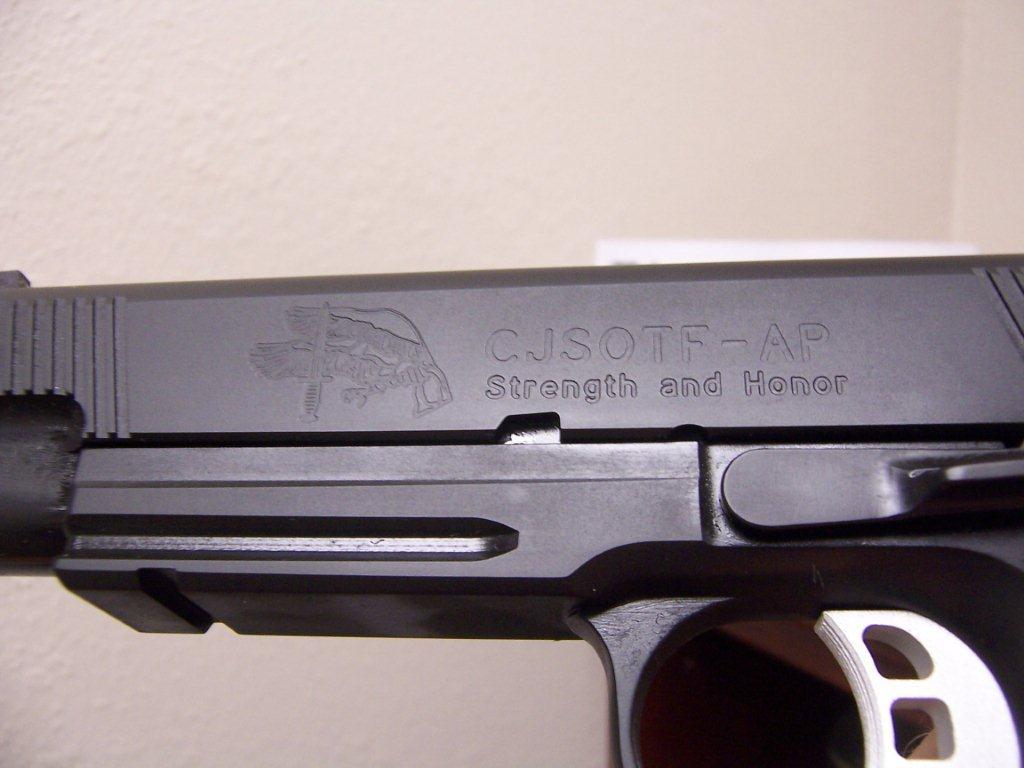
I still shoot this gun occasionally, and my kids argue over who gets it when I die. The joke is on them. I’m going to be buried with it.
It truly is one of a kind.
Does the 1911 have flaws? Of course it does. Everyone knows the list: limited capacity, finicky magazines, inconsistent reliability from one manufacturer to another, and more. But this article isn’t about any of that.
This is about the platform I grew up shooting. The gun my grandpa handed me when I was a kid. The gun my wife gave me. The gun that commemorates the war I went to.
An elegant weapon from a more civilized age.
Updated since publication
Last revised 7/25/2026. Evidence and limitations should be interpreted as described in the article.
Discussion
Comments are moderated before appearing here. Keep it useful, specific, and civil.
No approved comments yet. Be the first to add something useful.