Ingredients for the Known Ground reconstruction
Ingredient amounts shown for 10 servings.
Known Ground reconstruction
- 2whole pheasants, breasts cut in strips; remaining meat ground
- 1 lbfatty fresh pork, ground
- 12 ozveal, ground
- 12thin bacon slices, plus 6 oz cut in strips
- 3 ozfresh black truffle, sliced
- 1/4 cupbrandy
- 1 tspdried thyme
- 1/2 tspground bay leaf
- 1/2 tspground allspice
- 2 tspkosher salt
- 1/2 tspblack pepper
- 2 cupsprepared clear aspic
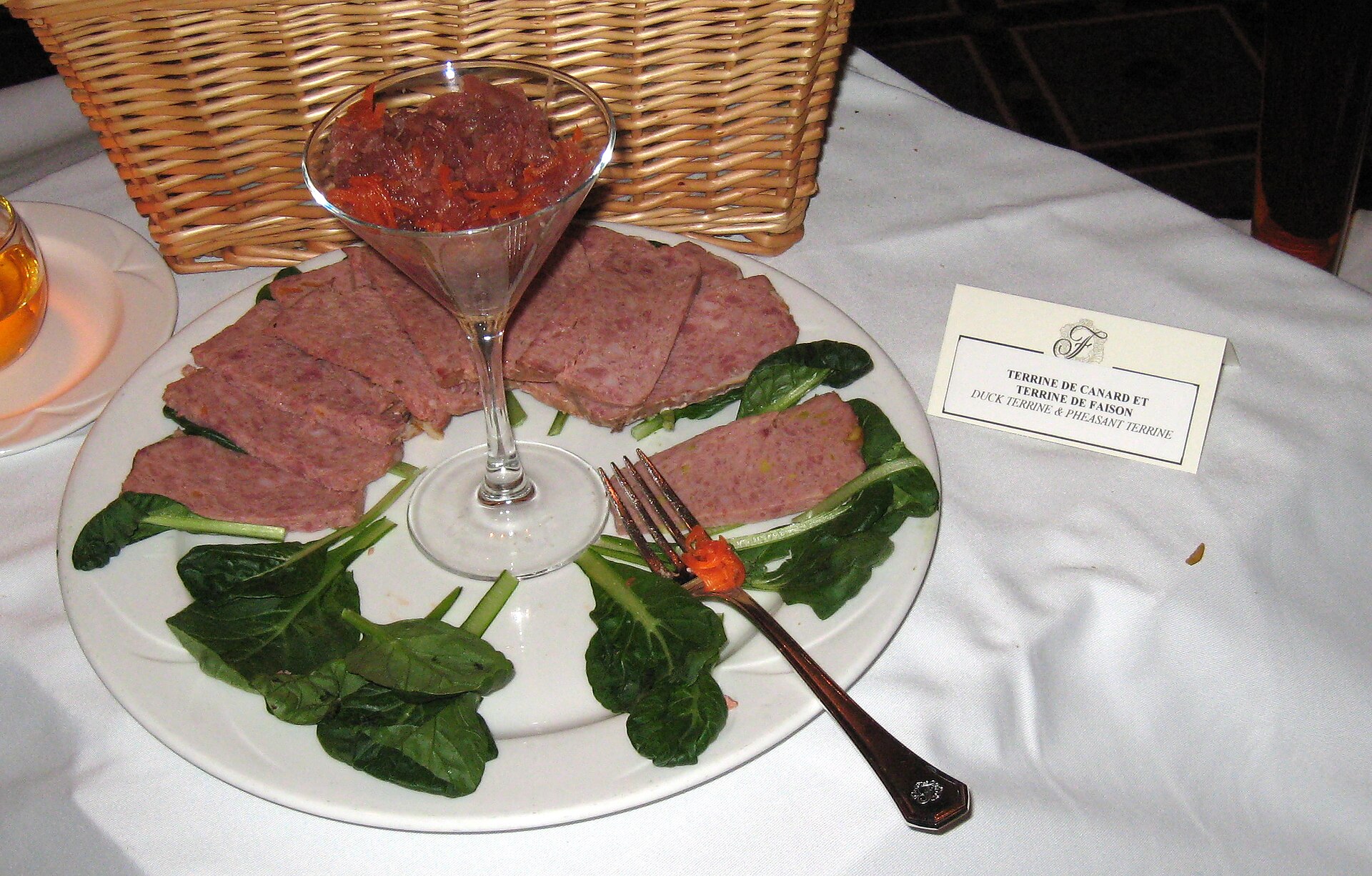
.jpg)
Known Ground reconstruction
An instant-read thermometer replaces the historical clear-fat and needle tests. The terrine is still layered, water-bath baked, pressed, chilled, and surrounded with aspic. This version has not been personally tested by Known Ground. Cook the bird and any poultry forcemeat to 165°F (74°C) in its thickest portion.
Instructions
1. Heat the oven to 325°F. Mix the ground pheasant, pork, veal, brandy, thyme, bay, allspice, salt, and pepper. Line a 2-quart terrine with overlapping bacon slices.
2. Layer forcemeat, pheasant breast strips, bacon strips, and truffle slices, repeating and finishing with forcemeat. Cover with bacon and the terrine lid or foil.
3. Set the terrine in a roasting pan of hot water and bake until the centre reaches 165°F (74°C), about 75 to 100 minutes. Cool slightly, weight the surface, and refrigerate overnight.
4. Remove surface fat and trim. Either slice in the terrine with aspic added around the edges, or unmold, set back into a thin aspic lining, chill, and turn out for presentation.
Historical formula
Method
Prepare it after the manner of the “Terrine de Lièvre” (No. 1825), and take care to make due allowance, in the cooking, for the difference, in the matter of tenderness, between the two meats. But the explanations already given on this subject ought to suffice for ascertaining whether or not the patty have cooked sufficiently.
Source
A Guide to Modern Cookery — Recipe no. 1863.
Updated since publication
Last revised 9/8/2026. Evidence and limitations should be interpreted as described in the article.
Discussion
Comments are moderated before appearing here. Keep it useful, specific, and civil.
No approved comments yet. Be the first to add something useful.