Ingredients for the Known Ground reconstruction
Ingredient amounts shown for 8 servings.
Known Ground reconstruction
- 1whole pheasant, about 3 lb, skin intact and completely boned
- 8 ozveal, cubed
- 1 lbfatty fresh pork, cubed
- 4 ozsalt pork, cut in long strips
- 4 ozcooked ham, cut in long strips
- 4 ozcooked salted tongue, cut in long strips
- 4 ozfresh black truffle, cut in strips
- 1/4 cupbrandy
- 1/2 tspfreshly grated nutmeg
- 2 tspkosher salt
- 1/2 tspblack pepper
- 8 cupsunsalted veal or chicken stock
- 2 cupsprepared clear aspic
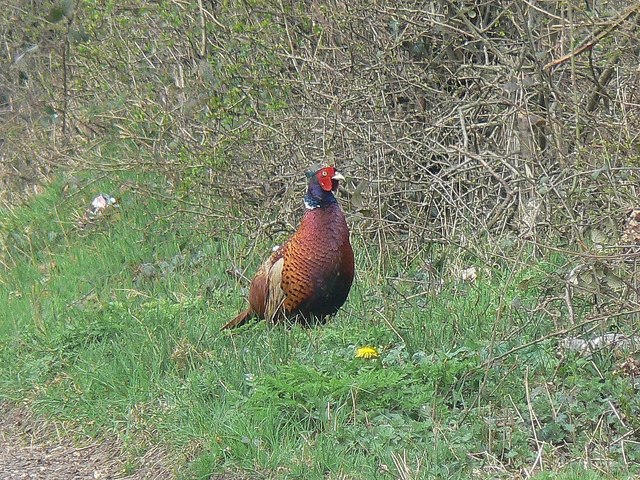
,_Hatherden,_Hants_-_geograph.org.uk_-_392838.jpg)
Known Ground reconstruction
A large stockpot and cheesecloth replace Escoffier's napkin and restaurant stock production. The pheasant carcass enriches boxed unsalted stock; the layered galantine construction is retained in full. This version has not been personally tested by Known Ground. Cook the bird and any poultry forcemeat to 165°F (74°C) in its thickest portion.
Instructions
1. Spread the boned pheasant skin flat. Cut the breast meat into long strips and marinate it briefly with half the brandy. Grind the leg meat and trimmings with the veal and fatty pork; season with salt, pepper, nutmeg, and the remaining brandy.
2. Spread one-third of the forcemeat down the middle of the skin. Arrange alternating rows of pheasant breast, truffle, salt pork, ham, and tongue; repeat with forcemeat and strips, then cover with the remaining forcemeat.
3. Wrap the skin tightly around the filling and sew or secure the seam. Roll firmly in damp cheesecloth and tie both ends. Add the pheasant carcass to the stock, bring to a bare simmer, and poach the galantine until its centre reaches 165°F (74°C), about 75 to 95 minutes.
4. Rest 10 minutes, rewrap tightly in clean cheesecloth, and cool under a 5 lb weight. Refrigerate until fully cold, unwrap, trim, glaze with half-set aspic, and serve with aspic croûtons.
Historical formula
Method
See “Galantine de Volaille” (No. 1708).
Source
A Guide to Modern Cookery — Recipe no. 1858.
Updated since publication
Last revised 9/8/2026. Evidence and limitations should be interpreted as described in the article.
Discussion
Comments are moderated before appearing here. Keep it useful, specific, and civil.
No approved comments yet. Be the first to add something useful.