I have carried enough pistols over my career to know which ones are built for people who actually train and which ones are built for people who merely talk about training.
I grew up shooting a Remington Rand 1911. That pistol spoiled me early. A clean single-action trigger and a gun that points naturally will do that. It belonged to my grandpa and still had “Property of U.S. Army” stamped on the side.
That gun taught me that the 1911 was more than nostalgia. It was a legitimate fighting pistol and, as the old joke goes, an undefeated champion of two world wars.
Like most cops, I spent the first ten years of my career carrying a Glock. It worked, but only in the same way a Honda Accord works. There was no imagination, no personality and nothing inspiring about it. It simply got me from point A to point B.
Glock fanboys like to pretend it is the only pistol anyone should trust. It has the same energy as a group of men wearing matching leather jackets with ACCORD embroidered across the back, loudly declaring that the Honda Accord is the only vehicle a real man can trust with his life.
I never enjoyed shooting the Glock. It was simply a tool that did what it had to do, complete with a mushy trigger and a grip angle apparently designed for some alien species.
Before that, in Iraq, I shot an M9 until it literally fell apart on me at the range. That was not the pistol’s fault. I had simply pushed an insane number of rounds through it and reached the end of its service life.
Later, I tried the FNX-45 Tactical. It was a great shooter with terrible holster support. A duty pistol that cannot be carried in reliable duty gear is not really a duty pistol.
Then I bought into the P320 hype. It felt great and shot well. In fact, I never shot below 100 percent on a duty qualification with it. But the reports of uncommanded discharges eventually became too significant to ignore. Whatever the explanation, I was not willing to gamble my femoral artery on the outcome.
That chapter was over.
Through all of it, I still wanted to carry a 1911 on duty. I owned three of them, and they were the most shootable pistols I had ever handled. Capacity was the only thing holding me back.
For years, I watched the development of the 2011 platform. The potential was obvious, but the platform never inspired complete confidence. It was not because shooters were too demanding. It was because manufacturers often treated the design like a suggestion.
The normal routine was to buy an extremely expensive 2011 and then pay a gunsmith even more money to make it mostly reliable. If anything about those early guns was consistent, it was the inconsistency of the magazines. They were expensive, finicky and unpredictable.
Staccato finally fixed the old 2011 headaches. The company took what had traditionally been a temperamental gunsmithing project and turned it into a legitimate duty platform.
Its magazines worked. The guns worked. Law enforcement agencies began authorizing them, and serious shooters started putting real round counts through them.
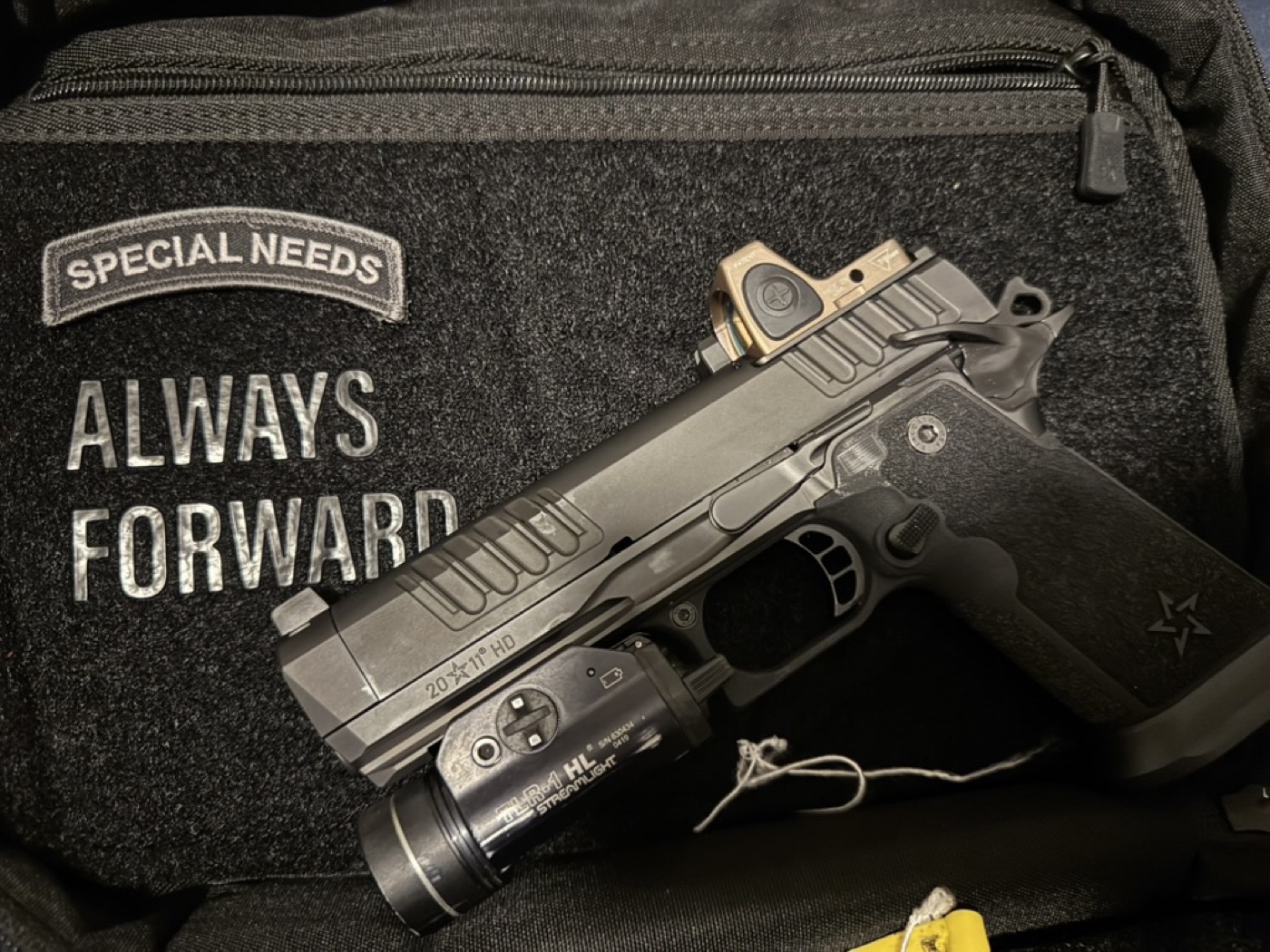
Then Staccato released the HD.
In a twist that feels almost unfair, the HD does not even rely on a proprietary 2011 magazine. It uses Glock-pattern magazines instead. Glock shooters love to puff out their chests over their blocky Tupperware pistols, but it is amusing that Glock’s greatest contribution to the handgun market—cheap, plentiful and reliable magazines—now feeds my Staccato.
Staccato combined the shootability of the 1911 with the capacity, reliability and logistical simplicity expected from a modern duty pistol.
You no longer have to pretend that “good enough” is the same thing as good.
I had to buy one.
Coming Home
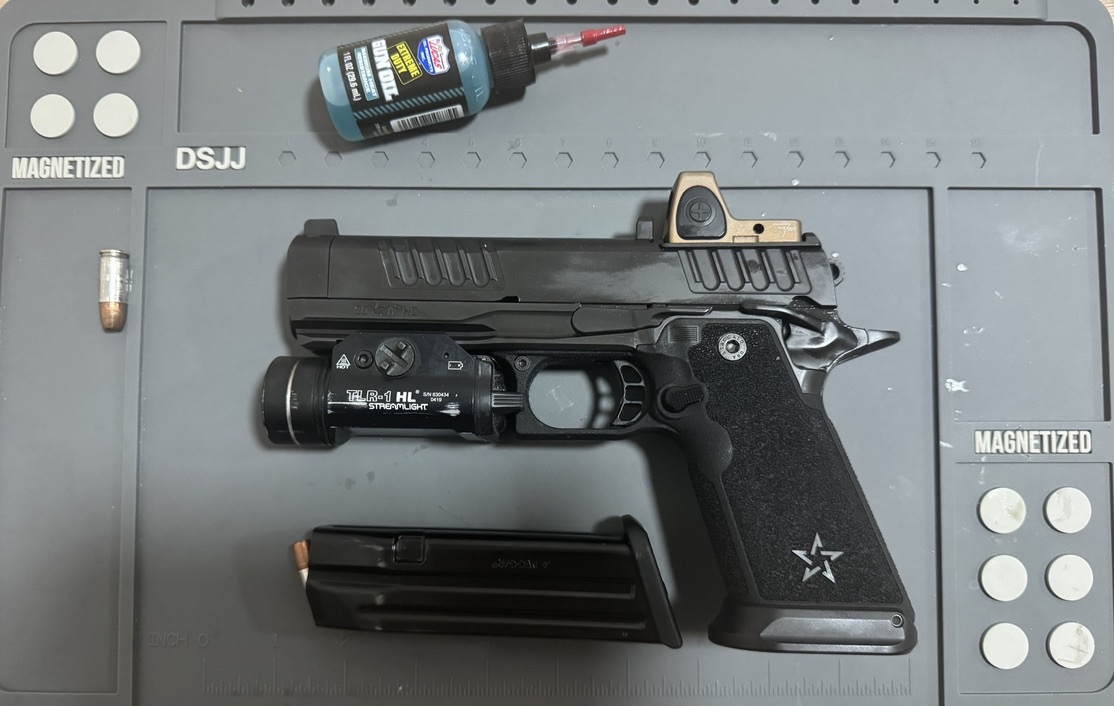
The Staccato HD 4.5 is the first duty pistol I have carried that truly feels like coming home.
It shoots like the 1911s I grew up with, but it has the capacity and reliability I require from a modern service weapon. Its recoil impulse is controlled and predictable. The sights return immediately. The dot barely leaves the window.
I can shoot 25-yard headshots at 100 percent, and with this pistol it feels normal.
The gun works with you instead of forcing you to overcome it.
That distinction matters. Any competent shooter can learn to run a mediocre pistol. We have all spent years proving that. But there is no virtue in selecting equipment that makes the job harder simply because generations of institutional buyers decided it was good enough.
The HD rewards the work you put into it.
Built for the Human Hand
The ergonomics are exactly what I want in a duty pistol.
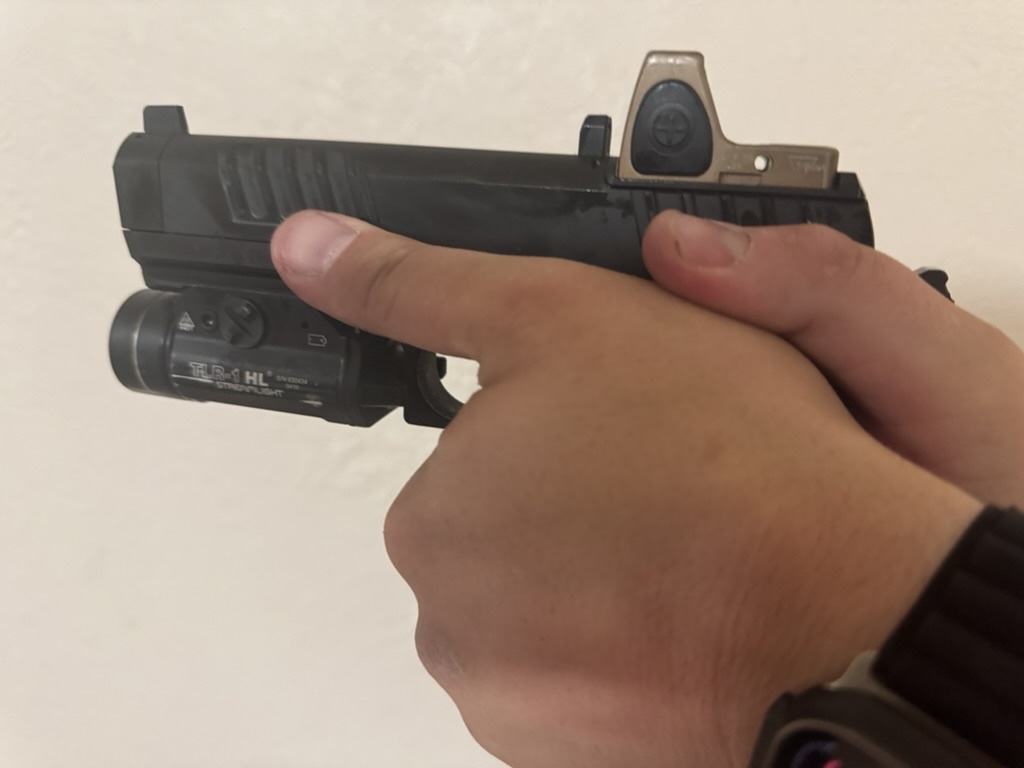
The grip texture sticks to the hand like skateboard tape. The grip is large, but not awkward. It fills the hand and locks the pistol in place without feeling unnecessarily bulky.
More importantly, it points naturally.
When I draw, the red dot is already there waiting for me. I do not have to search for it or fight the grip angle. The pistol arrives where I am looking, the way a fighting handgun should.
It feels natural in a way the old combat Tupperware never did.
The trigger retains the qualities that made the 1911 famous without making the pistol feel fragile or temperamental. It is clean, predictable and easy to manage at speed. There is no long, vague wall and no spongy guessing game before the shot breaks.
You press the trigger, and the gun does exactly what you intended.
Reliability Without Drama
Reliability has been flawless.
I shoot more than most people in this profession, and the HD has handled every round I have put through it without a single malfunction. Nothing has broken. Nothing has loosened. Nothing has required tuning.
There have been zero surprises.
That may sound like faint praise for a duty pistol, but it is exactly the point. A serious handgun should not be exciting because it barely survived another range session. It should be boringly reliable while allowing the shooter to perform at the highest level.
The HD has delivered that.
It has performed as close to perfectly as any pistol I have owned.
The End of Compromise
Is it expensive?
Yes.
Is it large?
Absolutely.
But this is the first pistol I have worn on duty that does not make me feel as though I am surrendering something important.
I am not accepting a bad trigger in exchange for reliability. I am not sacrificing capacity to get 1911 shootability. I am not relying on fragile proprietary magazines. I am not giving up practical accuracy, ergonomics or holster compatibility.
I have even carried it appendix with a full-size weapon light, and it remains completely manageable.
The HD shoots exactly the way I want a duty pistol to shoot. It inspires confidence. It hits what I aim at. It rewards sound fundamentals. It feels like a weapon built for someone who trains rather than someone who plays equipment roulette.
For decades, duty-pistol selection has largely been an exercise in deciding which compromises you are willing to tolerate. A bad trigger was acceptable because the gun was reliable. Poor ergonomics were acceptable because magazines were inexpensive. Mediocre shootability was acceptable because the pistol was simple to issue across a large organization.
The Staccato HD 4.5 challenges that entire arrangement.
You can have the speed and shootability of a 1911. You can have modern capacity. You can have dependable magazines, duty-grade reliability and support from serious holster manufacturers.
You no longer have to pretend that “good enough” is the same thing as good.
The Staccato HD 4.5 is not hype. It is not a range toy, a competition gun masquerading as duty equipment or an expensive status symbol for people who shoot twice a year.
It is the real deal.
For me, it is damn near perfect.
Updated since publication
Last revised 9/11/2026. Evidence and limitations should be interpreted as described in the article.
Discussion
Comments are moderated before appearing here. Keep it useful, specific, and civil.
No approved comments yet. Be the first to add something useful.